


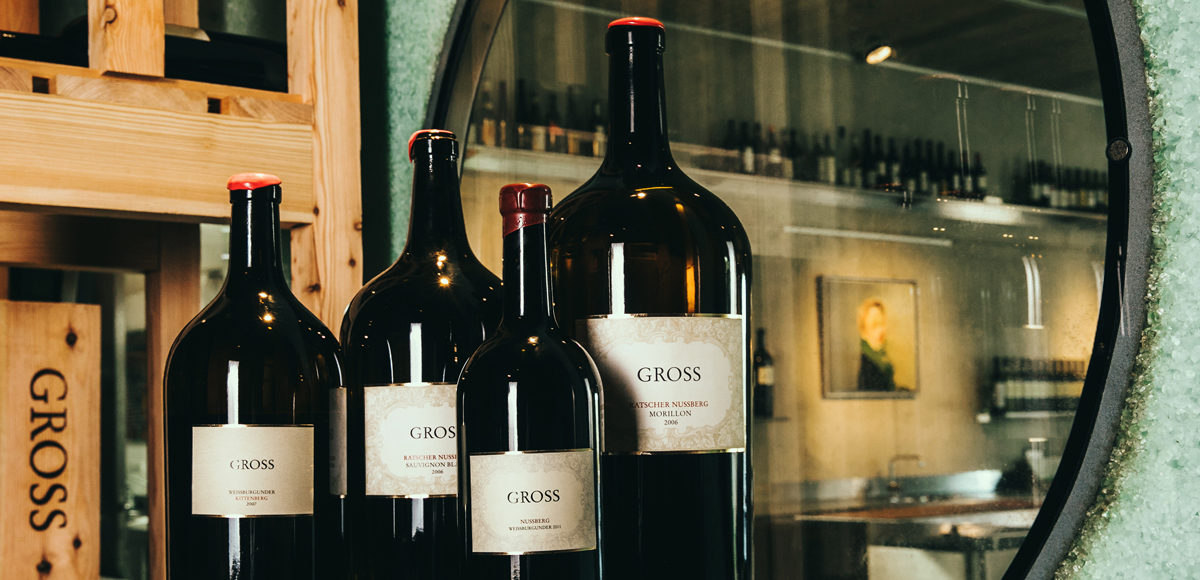
“Harvest good grapes at the right point of maturity and the magic of a millennia-old process can begin.” — Johannes Gross
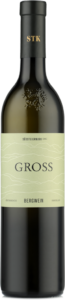
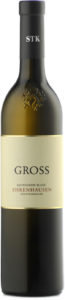
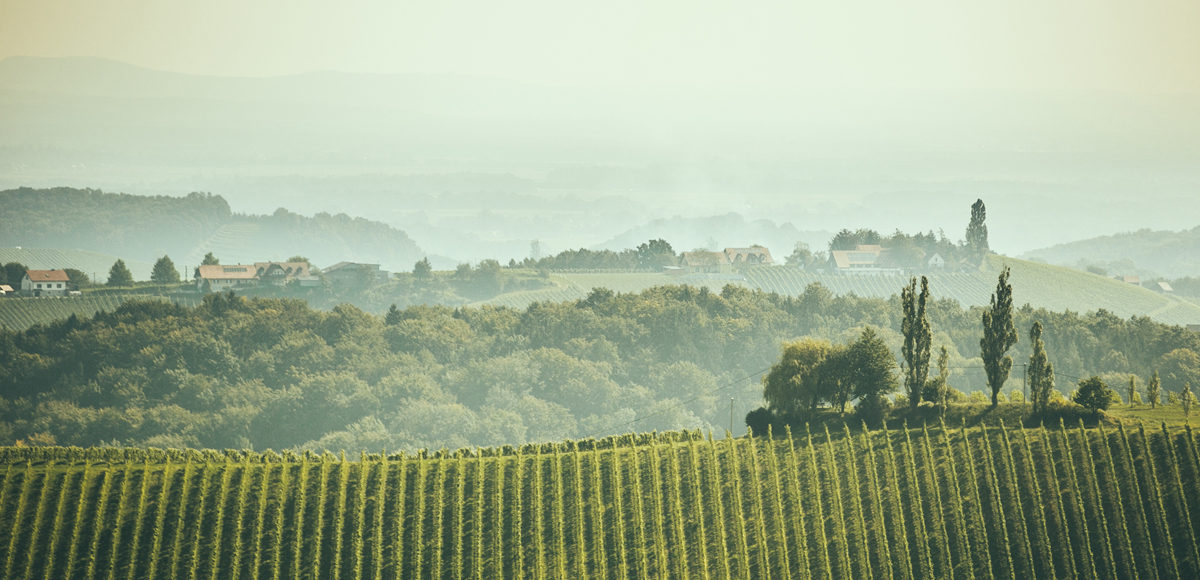
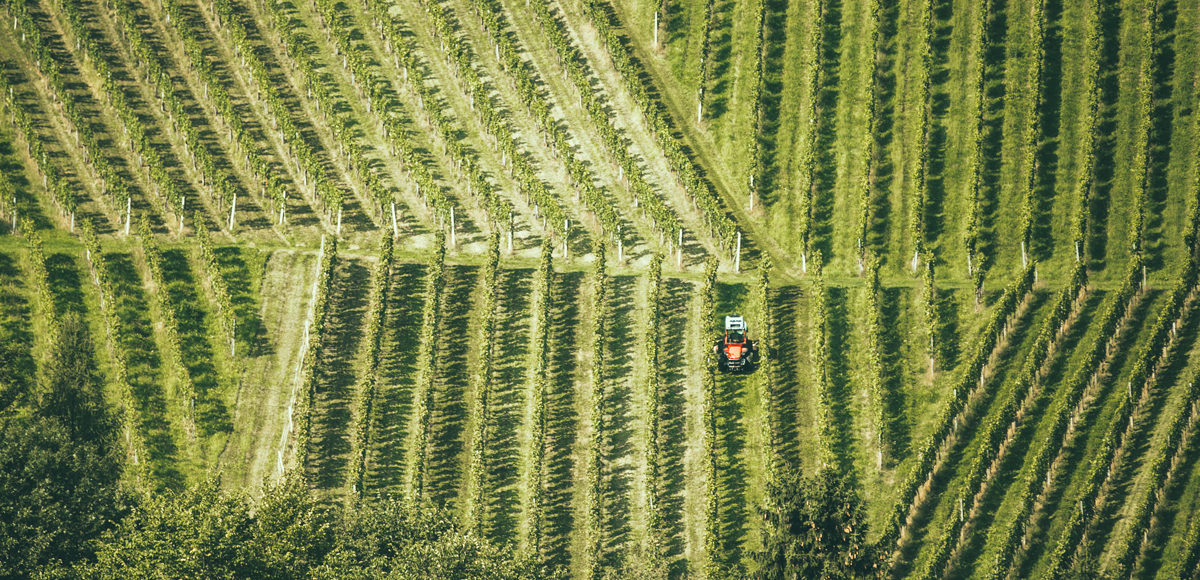
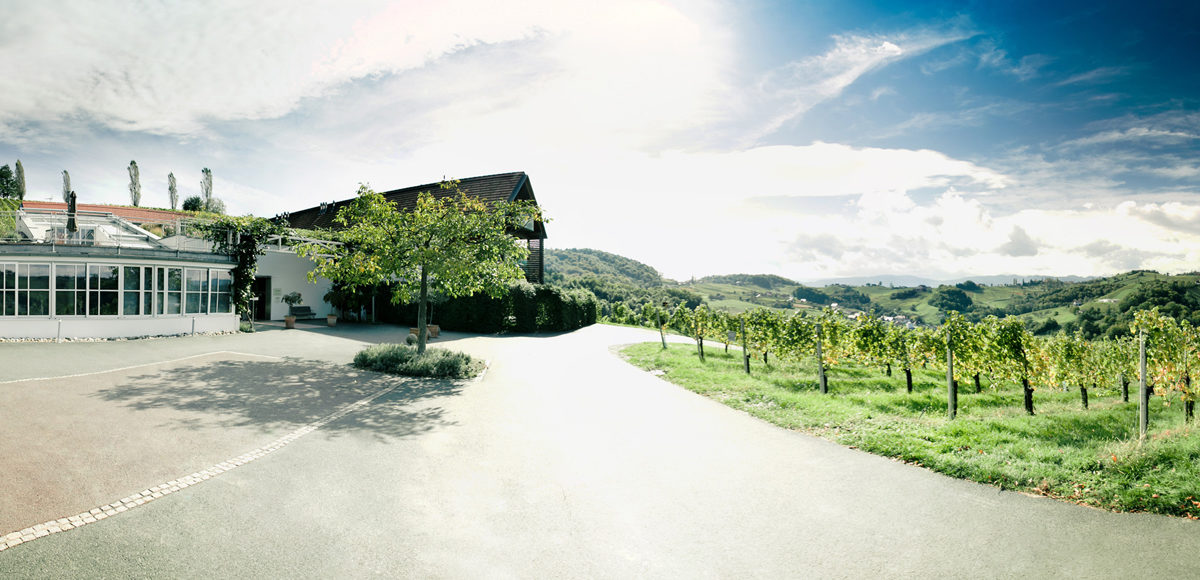
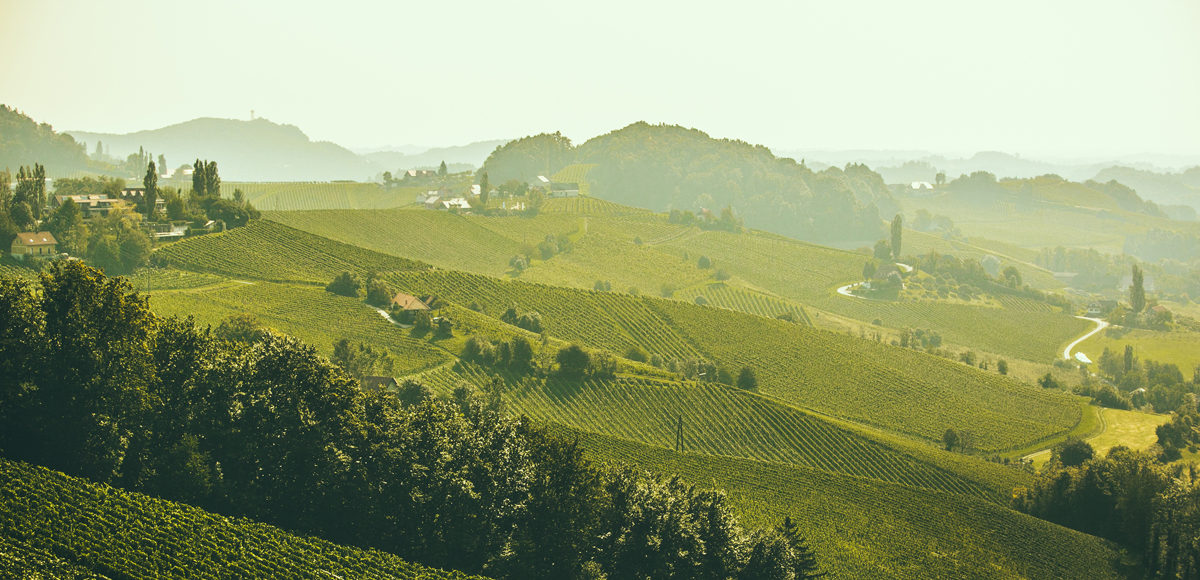
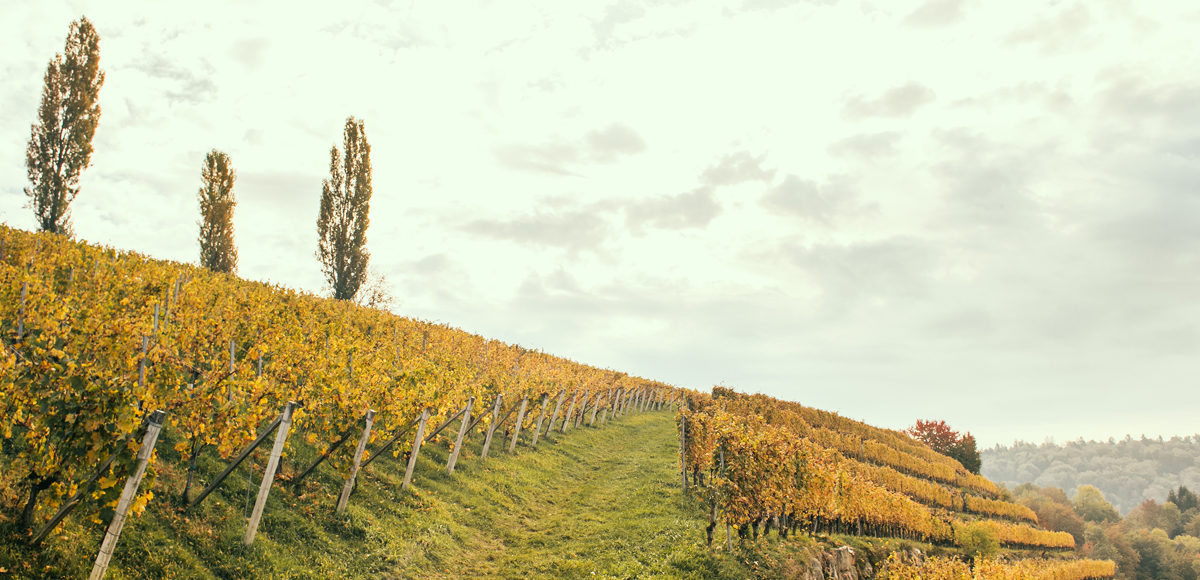
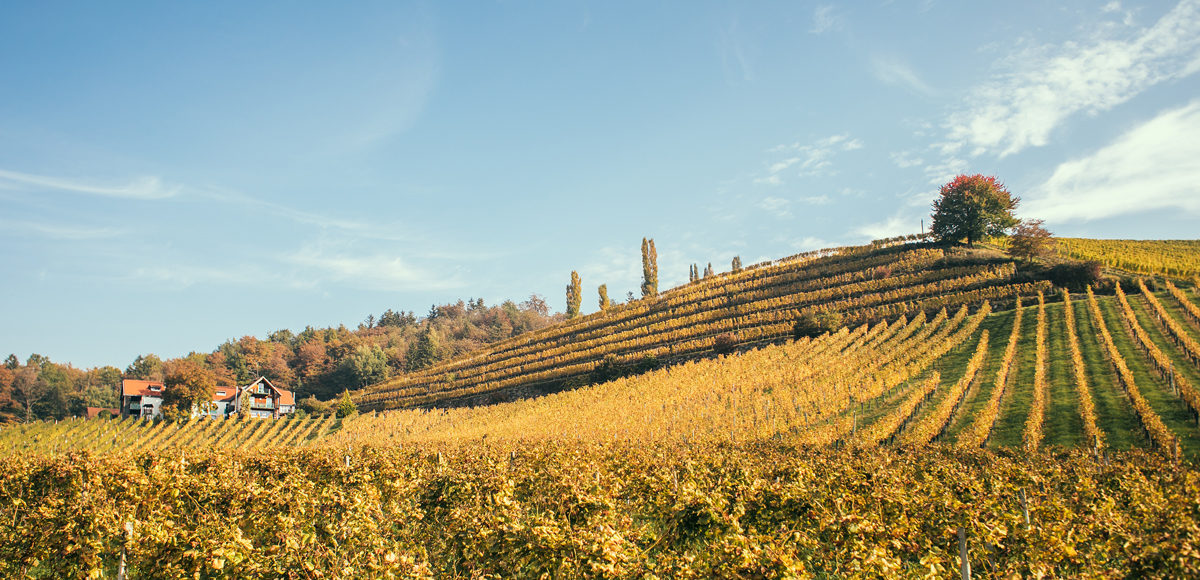
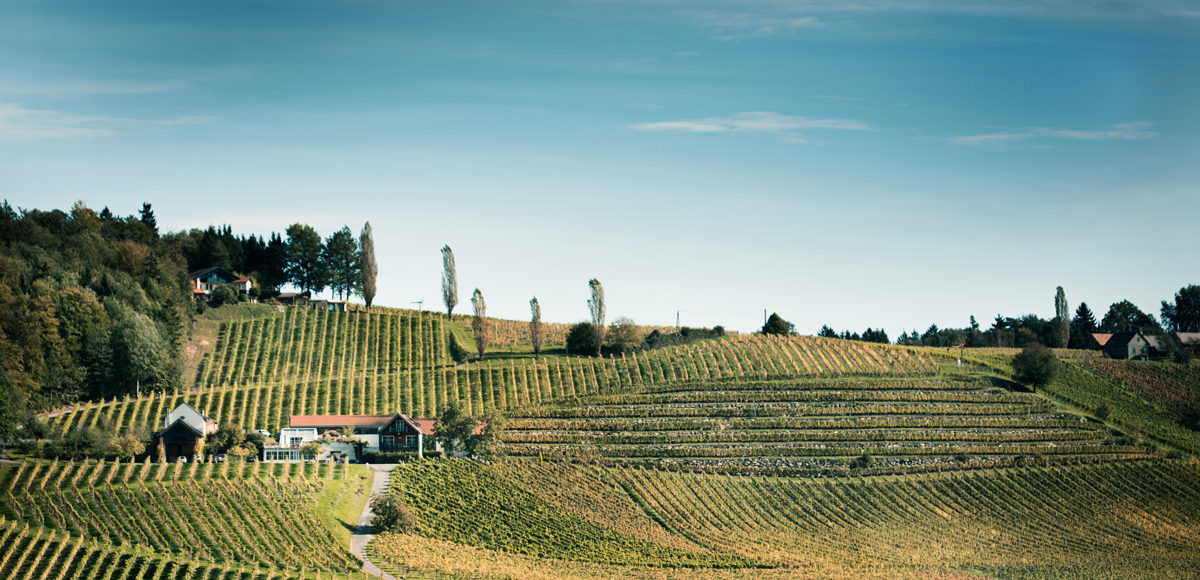
In Austria, the name Gross stands for a respected family with more than a century of winegrowing history — and, as it turned out, a connection to the land going back nearly five hundred years. Johannes Gross is the sixth generation of his family to farm in Ratsch, a small community within Ehrenhausen, on the poetically rolling green edge of Südsteiermark. It is a place shaped by the climatic tension between the Alps and the Adriatic, with steep, partly terraced slopes, soils of calcareous sediment (Opok) and volcanic origin, and a diversity of traditional Styrian varieties, above all sauvignon blanc. The family owns vineyards in some of Südsteiermark’s finest sites, including the Große Lage Nußberg and the Erste Lagen Sulz and Perz. The terrain demands intensive hand labor, and yields are kept very low. After years of conversion, the estate has been certified organic as of the 2024 vintage. In the cellar, the focus is on traditional winemaking methods and long aging. Single-vineyard wines rest at the estate for a minimum of four years before release. The result is captivating, aromatic, lively wines — sometimes delicate, sometimes powerful — that reveal the diverse expressions of Südsteiermark terroir.
History
The roots of the Gross family in Südsteiermark run deeper than anyone knew. In 2019, a historian discovered that Johannes’ ancestors had farmed the Nußberg from around 1550 until the late 19th century, when it was lost due to family circumstances. When Johannes’ father Alois purchased a vineyard and farmstead on the Nußberg in 1986, he had no idea he was buying back the family’s ancestral land. The site itself goes back even further. The Nußberg’s first documentary mention dates to 1289. The name does not mean “nut hill,” as one might assume, but originally “the hill that brings prosperity.”
The 20th century brought upheaval. Before the World Wars, Styria had around 30,000 hectares under vine and was the largest winegrowing region of the Austro-Hungarian Empire. When borders were redrawn after World War I, separating German-speaking from Slavic-speaking territories, most of the Gross family’s vineyards ended up on the Yugoslav side. After World War II, the border hardened completely. Families were separated, and traditional sales routes to cities like Maribor suddenly became inaccessible. Styria’s vineyard area shrank to roughly 2,000 hectares.
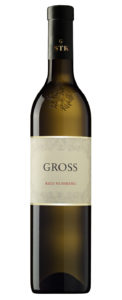
Johannes’ grandparents had to start over. Under a bilateral agreement between Austria and Yugoslavia, families severely affected economically by the border changes received back small parcels on what was now the other side of the state border, and were permitted to continue farming them. His grandfather, Alois Sr., received 0.34 hectares on the Witscheiner Herrenberg, a renowned steep-slope site in what is now Slovenia, which had to be replanted due to years of neglect. That parcel, with vines now 60 years old (planted in 1965), remains in family ownership today. By EU law, grapes that cross borders lose any appellation status, so Johannes can only label this wine with the basic Austrian quality designation (thanks to a bilateral agreement signed by the two countries in 1953). But he still produces it and values it as a direct link to family history.
In the postwar chaos, fraud was rampant. Producers labeled wines with famous vineyard names from sites they had no access to. Johannes’ grandfather responded by introducing varietal labeling — putting the grape name on the bottle rather than a village or vineyard name. At the time it was a progressive move: customers could trust what they were buying. But it also meant that a generation of Styrian wines focused on varietal expression rather than terroir.
In the early 1980s, Alois Gross, Johannes’ father, saw an industry defined by high costs and low quality. In that pre-global-warming era, three or four out of ten vintages simply didn’t ripen. The average Styrian estate farmed less than a hectare, and many families were giving up. Alois and a handful of like-minded producers decided to stay and change everything. They stopped adding sugar to mask poor fruit. They focused on the best sites, made fully dry wines, and let the climate’s natural freshness and aromatic intensity speak. When the Austrian wine scandal broke in 1985, Alois and his colleagues already had wines that were crisp, clear, and mineral — focused on quality. Consumers looking for trustworthy Austrian wine found it in Südsteiermark. Alois was a founding member of the STK (Steirische Terroir- und Klassikweingüter), an association of Styria’s top estates committed to regional typicity and quality.
Alois handed the estate to Johannes and Michael in 2006, when they were just 21 and 19 years old. Alois knew from his own experience how important it is to be given responsibility at a young age. In 2016, Michael — who had been developing the family’s Slovenian vineyards — chose to focus entirely on Vino Gross after harvesting a perfect vintage in his parcels (while frost destroyed 100% of the Austrian crop). In 2019, Johannes and his wife Martina assumed sole responsibility for Weingut Gross.
Johannes and Martina immediately made sweeping changes. They halved production — from around 300,000 bottles to 150,000, and from 50 hectares to roughly 30 — releasing leased vineyards and flatter, simpler sites to focus exclusively on steep slopes and the finest terroirs. They completed the conversion to organic farming, achieving certification with the 2024 vintage. And in 2025 they introduced a new bottle shape (Burgundy rather than Bordeaux) and a new label design to signal a new chapter. “My wife and I thought hard about what footprint we want to leave in the history of our family estate,” says Johannes. “She said: ‘You’re a farmer. I’m not a saleswoman, I’m a farmer. I love making wine, I love being in the vineyard, but office time is dreadful for me. If we both want to focus on what we truly love doing, we need to get smaller, to concentrate on what we love.’”
Johannes Gross
“When I was six, I wanted to be an astronaut,” says Johannes. “But I gave up the idea when I heard how long you’d be away from home. Today, that would be unthinkable for me.” Johannes wasn’t much older when, “listening to my father talk about his wines,” he understood that winemaking would be his future too. “I didn’t study at university, but I worked a great deal in vineyards and cellars, traveled the world, and talked with interesting people in the industry.” He also had the good fortune of spending time with his grandparents, which gave him perspective not only on his father’s approach but on what came before. For him, “happiness is … living among vineyards, wild orchards, and groves, surrounded by family, doing loving and devoted work.”
Johannes prefers the German word Herkunft to the French terroir. “Terroir is a French word, and there’s no German equivalent,” he says. “But Herkunft is a combination of tradition, culture, and a small piece of land. I think that expresses better what I mean.”
Martina Gross
Martina grew up on a livestock farm in the mountain areas of northern Styria. Her family is deeply rooted in agriculture, but not in wine. When she and Johannes married, she resisted the traditional path of the winemaker’s wife stepping into office administration. Instead, she chose the vineyards. “She brings completely different ideas,” says Johannes, “influenced not only by what’s good for the wine, but by what’s good for us. What effect does this decision have on our family?” It was Martina who pushed for the estate to get smaller and focus on what they love. Johannes quotes his grandmother: “My grandfather always made the small decisions, and she made the big ones.” He laughs: “I think it’s the same now.”
Martina oversees much of the vineyard organization and leads the estate’s hospitality program, including seasonal terrace service featuring her homemade Styrian specialties.
Ratsch / Südsteiermark
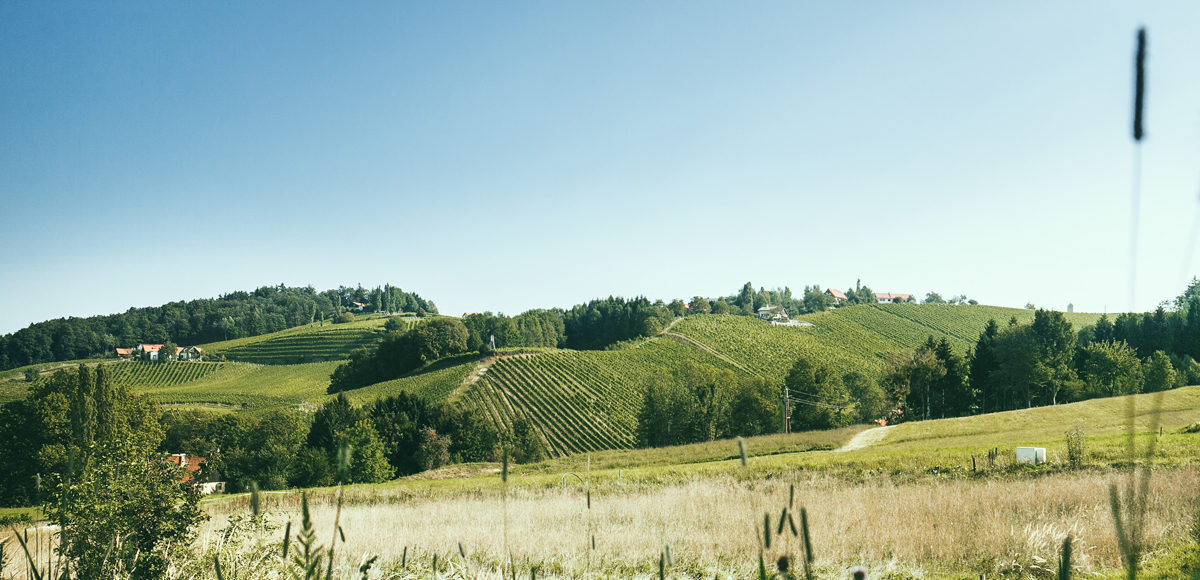
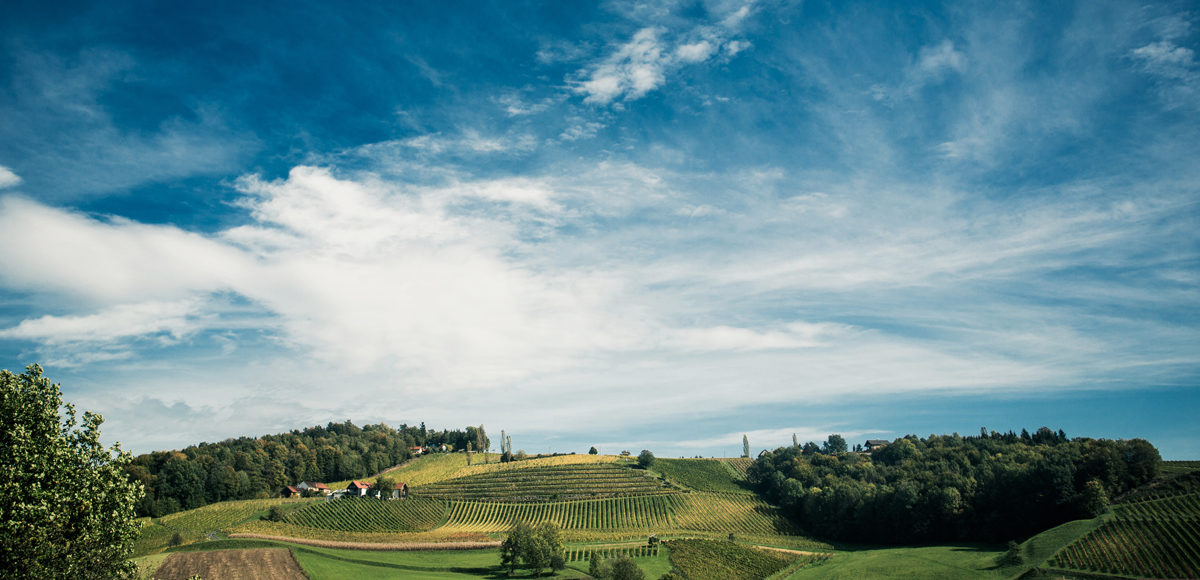
Südsteiermark is a poetically green, hilly region stretching eastward from the state capital Graz to the edge of Burgenland and southward to the Austrian-Slovenian border. Nestled between the Alps and the Adriatic, steep vineyard amphitheaters alternate with meadows, forests, and small fields, forming a fairy-tale landscape with a distinct wine culture. “Winemaking has been practiced here since the Romans and remains the most important economic driver in the region,” says Johannes. Under the Habsburgs, Styria extended into what is now Slovenia and formed a single large wine region that was divided when political borders were redrawn after both World Wars.
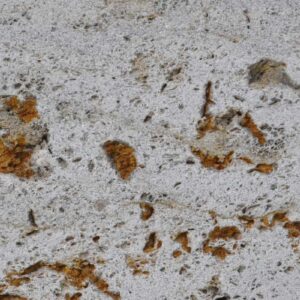
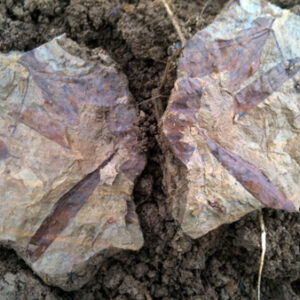
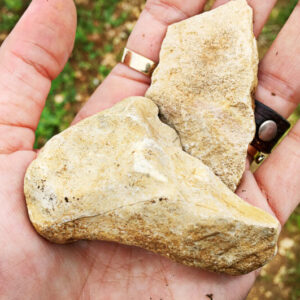
Johannes explains the geological history behind the characteristic terrain: “When the ancient sea receded around nine million years ago, clay and marl were deposited in crisscrossing layers. Rivers and wind brought gravel and sand, shaping hill after hill.” The soils today are a very diverse mix of ancient marine and alluvial deposits: sand, gravel, marl (known locally as Opok), and limestone, with even some volcanic soils.
Ratsch sits at the heart of Südsteiermark, one of three Styrian sub-regions widely regarded as best suited to sauvignon blanc, which is typically planted on the finest parcels. Aromatic whites — including gelber muskateller, weissburgunder, morillon, and welschriesling — are also hallmarks of the sub-region.
“There are two great challenges to winegrowing here: the climatic and the topographic,” observes Johannes. “Unpredictable weather, extremely steep slopes, and a great variety of soil formations in our vineyards are both a challenge and a gift. We need 600 working hours per hectare — many times more than other wine regions. The high elevation of the vineyards near the Alps makes this a true cool-climate area. Aromatic, fresh wines with natural acidity and energy grow here naturally. Grapes ripen fully in this alpine-Mediterranean climate, and with temperature swings of up to 20 degrees Celsius between day and night, they carry both freshness and aromatic intensity.”
Farming and vineyards
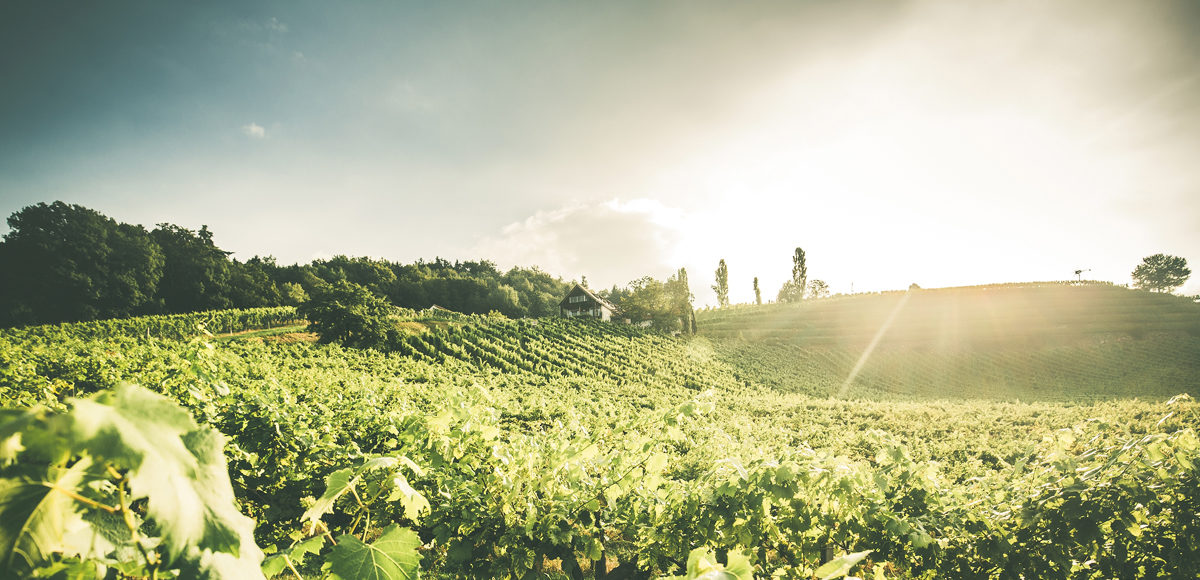
The estate farms just over 30 hectares today and has been certified organic since 2024. About 95% of the vineyards lie in the Ehrenhausen municipality, and around 90% of the soils are of limestone or coral reef origin. In a sensitive climate, responsiveness is everything. “We work a little differently each year in terms of yield, canopy management, and cover crop management. We want balance in our wines, so we need balance in our vineyards. That also means lower yields per vine — around 1 to 1.5 kg per plant. We’re looking for the perfect grape according to ripeness, without botrytis. We believe there is a perfect ripeness window. That window is what we try to catch.” The wines are above all fresh, carried by natural acidity and energy that, in Johannes’ words, “grow here naturally” — largely thanks to the heat-retaining effect of the bowl-shaped vineyards and the nightly inflow of much cooler mountain air from the Alps to the west.
Johannes notes: “We find significant differences between the soils in our Ehrenhausen municipality, which are strongly calcareous — marl and limestone — and our vineyards in the neighboring municipality of Gamlitz, where you find gravel and sand, and very aromatic, early-accessible wines grow.” Gamlitz is where you’ll find their gelber muskateller.
Rootstock selection is becoming increasingly important as the climate changes. Johannes has removed vines his father planted on SO4 rootstock, which accelerates ripening by two weeks — a characteristic that is no longer desirable in a warming climate. He is returning to rootstocks his grandfather used, and experimenting with others such as Fercal, which help moderate vigor and extend hang time.
Vineyard Sites
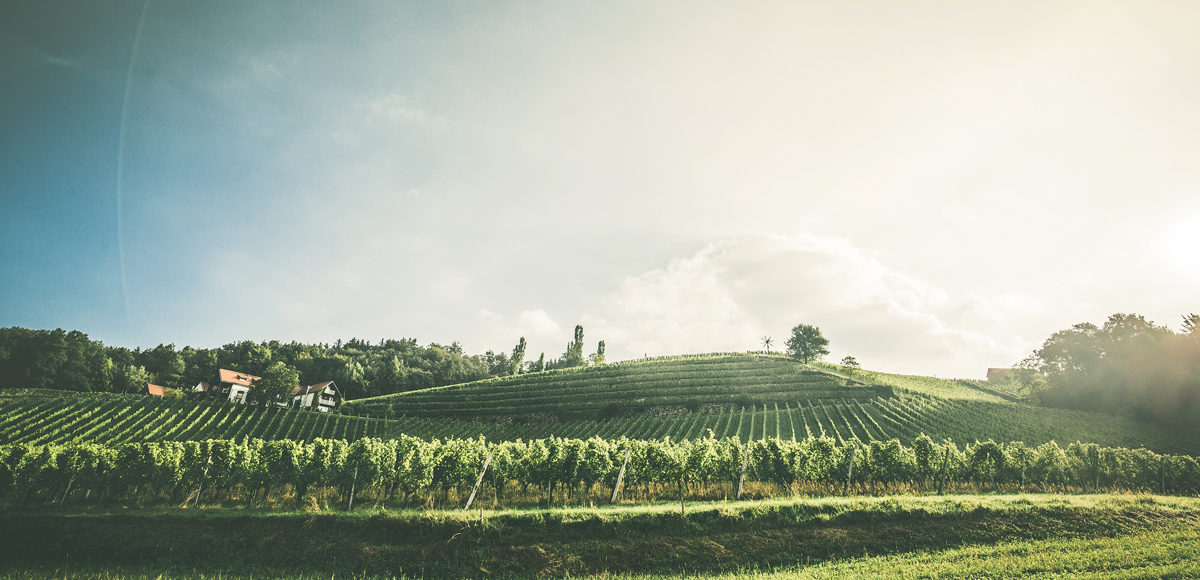
Ried Nußberg: The home vineyard surrounding the estate and, as the family discovered in 2019, their ancestral land since the 1550s. First documented in 1289, the name originally meant “the hill that brings prosperity.” The total area is roughly 9 hectares, of which Gross owns approximately 6.5. It is a cone-shaped basin between 370 and 460 meters elevation, with south and west exposure and slopes that can be extremely steep — some terraced by Johannes’ father in 2000. The geology is unique in South Styria: layers of volcanic tuff are interspersed with the calcareous marl (Opok), and the groundwater has such high sulfur content that it is undrinkable. An unusual combination of calcium and sulfur that Johannes believes profoundly shapes the wines. The average vine age across the entire site is around 30 years, but the Nußberg bottling comes from vines averaging 40 to 45 years. This is the estate’s flagship wine.
Ried Sulz: One of South Styria’s largest sites (over 30 hectares in total) and its warmest. It is sheltered from the cold Alpine winds coming from the west. South-facing and open to the east, the site warms considerably during the day. Gross owns roughly 4.5 hectares here, plus another 2.2 hectares in a lower section that goes into the village wine. Soils are heavier calcareous clay, conglomerate, and sandstone. The family began acquiring parcels here in 1962. Average vine age is 25 to 30 years (oldest vines from 1989). Johannes describes Sulz as warm and inviting on the nose with floral and spicy notes and a structured clay palate. “It’s the first step into the world of our single-vineyard wines,” he says, “because it’s so inviting.”
Witscheiner Herrenberg: The family’s original vineyard — 0.34 hectares, purchased by Johannes’ great-great-grandfather at the end of the 19th century — on the Slovenian side of the border in the village of Svecina. Extremely steep, with lean Opok soils and vines over 60 years old. Under EU law, Johannes cannot use any appellation-specific designation since the border is crossed. He produces the wine nonetheless as a tribute to family history.
In the cellar
“In the cellar, we’re going back to the techniques my father had at the beginning of his time as a winemaker,” says Johannes — and increasingly, further back than that. He has studied 19th- and early-20th-century winemaking texts from which his grandfather learned. Before World War II, the books said easy-drinking wines should be consumed in the first year, but wines from great sites and great vintages needed long cellar time. Up to six years in barrel was normal. Postwar technology (filtration, earlier bottling) changed that practice. Johannes has returned to the old model: “Perhaps returning to the old idea — giving the wine its time, giving it time in barrel — brings us closer to what our true expression of terroir is.”
Every vineyard block is vinified separately. Vessel selection is determined by the needs of each wine, not by dogma. The estate’s barrel stock consists of oval casks of 900, 1,200, and 2,400 liters, between 20 and 50 years old. Johannes buys from the same Carinthian cooper his father and grandfather used, and still knows the family personally. The oak is less toasted than typical French oak, so the first three to four fills are used only for press wine. After that, the barrels can last 50 years or longer if kept full. The last barrel Johannes replaced was built in 1947 and purchased secondhand by his grandfather in 1952.
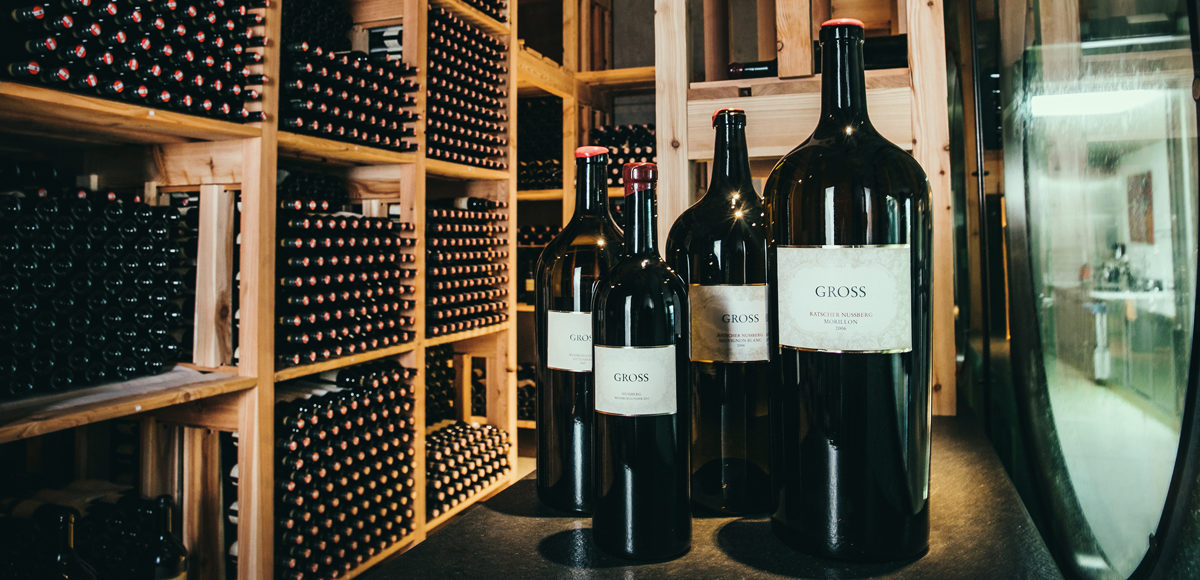
All sauvignon blanc wines are destemmed, briefly macerated, and gently pressed. They ferment slowly and spontaneously in traditional wooden vessels, then age 12 months in large wood and six months in stainless steel. All wines go through malolactic fermentation. Sulfur is added minimally, and only shortly before bottling. Johannes uses bentonite for fining, which allows him to avoid filtration and reduces histamines. Single-vineyard wines age a minimum of four years at the estate before release — far longer than the typical 18 months — to allow the terroir to fully express itself.
The estate maintains extensive archives of older vintages and releases them periodically as they reach their optimal maturity.
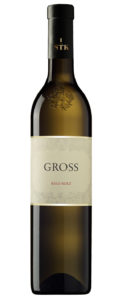
The Gamlitzer Gelber Muskateller comes from the neighboring municipality of Gamlitz, where sandy and gravelly soils yield highly aromatic, approachable wines. The grapes undergo brief maceration before a gentle pressing cycle. Spontaneous fermentation takes place in stainless steel tanks, where the wine rests and ages on fine lees for six months.
STK Classification
Gross is a founding member of the Steirische Terroir- und Klassikweingüter (STK), an association of 12 Styrian estates committed to regional typicity and quality. The STK system classifies wines in tiers, from fresh regional wines up through village wines to single-vineyard wines. At the top are Erste STK Lage and Große STK Lage, the latter requiring a minimum of 18 months aging before release. Gross holds Große STK Lage status for Nußberg and Erste STK Lage for Sulz and Perz.
Gross & Gross: Jakobi
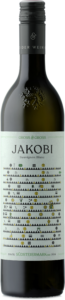
Originally conceived as a collaboration between Johannes and his brother Michael (who leads winemaking at Vino Gross, just across the border in Slovenia), Gross & Gross is today a négociant project run by Johannes and his wife Martina. Their Jakobi project honors both sauvignon blanc, the signature variety of South Styria, and the rural traditions of the region. For this wine, they purchase grapes from small growers and use stainless steel and controlled fermentation to emphasize fresh fruit. These wines are meant to show earlier and drink more easily.
The label is a woodcut-based pictogram depicting the key details of each vintage (weather, lunar cycles, planting, pruning, harvest) in traditional iconography. It draws on the ancient Mandl calendar (small figures), once created for the illiterate and still found in many homes throughout the region — including in the grandmother’s kitchen of Johannes and Michael when they were boys. The wine is named for Jakobi (Saint James), whose feast day typically coincides with véraison and is celebrated each year on July 25th in Ratsch. By tradition, wooden windmills are erected on that day in the hope that their rattling keeps the birds away from the ripening grapes.